Wednesday, December 30, 2009

Economical and Accessible Art!

I am always on the look out for artists who create work that can inspire fabulous lessons using economical and accessible materials. And Rebecca Ward is a new find for me that fits the bill.
seventeen is sharp, kansas city, charlotte street foundation, electrical tape, paragraph gallery

domy books, houston, rebecca ward, electrical tape
Made with electrical tape!! So gorgeous!

Monday, December 21, 2009

Cut Paper Love!

I have been musing over some cut paper/altered book projects for a while...I am dying to develop a lesson plan that really immerses students into the techniques of cut paper and altering books, but it will have to wait until I have students for more than a day a week. If I did have my own classroom and I happened to be conducting a lesson on such artistic mediums in New York City, I would take my class to see this exhibit at the Museum of Arts and Design that opened several days ago.

Slash: Paper Under the Knife takes the pulse of the international art world's renewed interest in paper as a creative medium and source of artistic inspiration, examining the remarkably diverse use of paper in a range of art forms. Slash is the third exhibition in MAD's Materials and Process series, which examines the renaissance of traditional handcraft materials and techniques in contemporary art and design. The exhibition surveys unusual paper treatments, including works that are burned, torn, cut by lasers, and shredded. A section of the exhibition will focus on artists who modify books to transform them into sculpture, while another will highlight the use of cut paper for film and video animations.

A work by one of my favorite artists, Brian Dettmer, from the show.

Making History Visible

In the photographic series “The Green(er) Side of the Line,” Alban Biaussat documents places and spaces along the Green Line of the 1949 Rhodes armistice agreement, and thereby shows the improbability of separating the physical space of a family’s back patio or a local butcher’s shop that happens to be on the line.
The Green(er) Side of the Line

(Biaussat was born in Paris in 1970 and though he has an MA in photojournalism and documentary photography from the London College of Communication, he also has had a postgraduate level of education in business studies and international relations.)

"In the Middle East, new political concepts, initiatives and slogans are plenty, supplementing each other month after month as the previous ones exhaust themselves, but there is one reference that has borne a sustained potential for visualization, if not for political vision: the Green Line. It is, it seems, well enshrined in people’s minds, whether they like it or not, as a valid political reference.

Since the Oslo years of the 1990s, the 1967 “border” has become the orthodox reference for negotiating the final contours of an improbable “viable” Palestinian State – or, as some would probably prefer, of a viable continued Israeli occupation. Consistently represented in green on a series of geographical maps, it has emerged as the Green Line, attributing also political and legal in/correctness to a series of issues, such as Israeli settlements. Most people would probably assume that the 1949 line has remained the same till 1967. This overlooks the fact that the line has moved during this period. Its position has been continuously affected by the military and economic tactics of the parties and their desire to push the real “line” to the other side of the armistice “zone” where there was one, as is particularly the case in the Golan and near Latrun.

I decided to make the Green Line appear. Photography would be my magic wand.This project thus intends to instrumentalise the visual nature of this political concept and wants to be a gentle, yet absurd, kick in the big green eyes of the so-called solution of “two States living side by side in peace and security along the 1967 border.” By doing so, it intends to communicate, with a smile, a sense of absurdity when envisaging the likelihood of establishing borders in this landscape, if such a thing is possible at all. More interestingly, it is about showing the physical landscape of possible political separation, as was the case in the past, and about generating critical thinking and a healthy feeling of doubt to keep the door open to alternatives."

-Alban Biaussat about his series "The Green(er) Side of the Line"

The Global Contexts of Vik Muniz

As a proponent of place-based education, and lover of community mapping through art, I have been drooling over the new book release, The Map as Art: Contemporary Artists Explore Cartography. In this book, I came across this work by Vik Muniz that has excited me and caused me to research him further.
WWW
WWW, 2008 (WWW is a photograph of an installation work made of electronics and computer parts.)

Vik Muniz is from a working class family in San Paulo, Brazil and calls himself, “a Hugo Chavez of the art world,” going on to say, “I want to make populist art that anyone had access to…if I knew how dogs look at things, I would make art for them, too.” He uses everyday objects, such as sugar, diamonds, chocolate syrup, and thread, to create massive scale installations that represent people or places that he then photographs.

Muniz has said that many people are “numb to representation” and his work is inviting people to look beyond what his pictures depict and focus on the acts of making and viewing art. His work and objects connect to the places in which they were made or places they reflect on, such as the Sugar Children series, that consists of sugar portraits of children of Caribbean plantation workers. Muniz has also created the Centro Espacial center in Rio for the art education of the shantytown youth, whom which he enlisted help in creating his large-scale Pictures of Garbage series.

I plan to create some lessons based on the work of Muniz and teach them in my fieldwork sites, so expect some follow-up posts to come!

Thomas Doyle


FirstAid1

FirstAid2

An artist near and dear to my heart, is Thomas Doyle, who creates miniature sculptures of strange and dark situations in snow globes or various containers of sorts. His artwork, that focus on setting a scene and displaying a narrative, can be of great use in the classroom.

Wednesday, September 23, 2009

Teaching Resources

Of all the teaching resources to be found online, I am most excited about these few fun and free tools that could be put to great use by artist teachers!
  • Xtranormal Text-to-Movie is great little program that lets you and your students, imagine up little movies and create them for free, using your own script and direction. Choose your actors, their accent, their actions, their words, the set, the music, just about everything! An easy and effective tool for visually teaching ideas or letting your students express their own ideas and understanding through.
  • Classroom Architect provides a super easy platform for creating and planning your classroom floor plan. It lets you save several plans and print them with the click of a button. A super useful tool for teachers with limited space! Here is a sample floor plan I threw together:
  • Picnik is a quick and dirty photo editing program that is both free and requires no software! Simple and easy edits can be done right there in the browser!
  • Art Babble is a fabulous resource for artist teachers striving to add some contemporary media to their lessons. It the youtube for all things art! From full length artist lectures from places like the Hammer Museum to new interviews and footage of artists like Catherine Opie to artistic research video such as those done by the Van Gogh Museum, it has so much to offer to those of us teaching in the arts! I'm fond of this clip of photographer, Henry Wessel, talking about his photographic process, shooting from cars.
  • Skitch is one of my favorite tools, that makes creating powerpoints, visual aides, and blogging so much easier! Not to mention, making image sharing fun! Skitch takes screenshots of your desktop, browser, or whatever you happen to be looking at on your computer. Not only can you quickly grab these images, you can add arrows, captions, and sketches to these images. Jing is a similar free service that also takes screen videos in addition to still images, but the Skitch application comes with an adorable pink heart icon, how could you say no?

Tuesday, August 18, 2009

Old news....

The discontinuation of Polaroid film is clearly old news, but my wounds are still very fresh months and months later. I love this article with the audio component of Polaroid photographers, so I wanted to share it.


Thursday, June 25, 2009

Neato Neto!!!

Forgive me for not posting in a couple months, after spending a year wrapped up in arts education, I took a bit of a break and have been putting my blogging efforts into something a little different. But I am slowly getting back in the art ed groove, so here is some art love to share!

Check out this post at the blog, Sweet Fine Day.
Ernesto Neto had an installation in NYC at the Park Avenue Armory that is out of this world! I want to live in it!


Monday, April 27, 2009

A Call for Suggestions

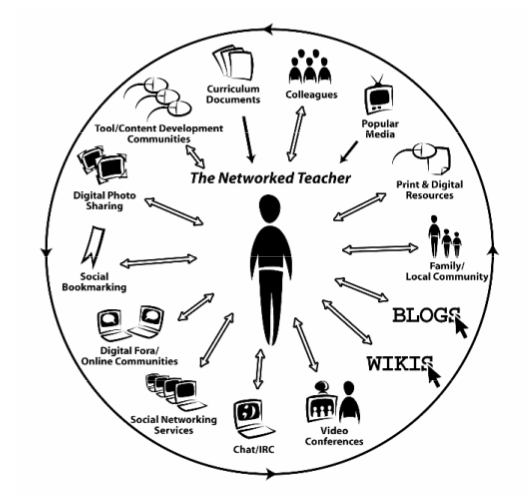
As a preliminary activity for my thesis unit plan, I plan on doing an identity mapping activity with my students. I would like this to become more than just a ven diagram of sorts, I would like them to create artistic and creative diagrams from the activity. However, I am coming up dry on how to go about doing this and full of many questions...what sort of diagram, how to diagram coherently and creatively, what materials, what structure should it have, what should it look like, etc. I am open to any suggestions!!! As a side note, while google image searching, I came across this diagram that might be of cyberpedagogical interest:
The Networked Teacher.png